

Why Are My Floors Cloudy After Mopping?
Updated: Sep 30
If your floors look dull, hazy, or cloudy after your robot mop finishes cleaning, you're not alone. Cloudy floors are one of the most common complaints among robot mop owners.
The good news is that cloudy floors are usually caused by residue buildup rather than damage to the floor itself. In most cases, a few simple maintenance steps can restore a clear, streak-free shine.

What Causes Cloudy Floors?
A cloudy appearance is usually caused by a thin film left behind on the floor surface.
Common causes include:
Hard water minerals
Too much cleaning solution
Soap residue buildup
Dirty mop pads
Residue inside the robot mop system
Mineral deposits in water lines and tanks
Over time, these materials can build up layer by layer until floors lose their shine.
Cloudy floors are often caused by hard-water minerals, excess cleaner or old residue. Hard Water Floor Funk Fix is made for everyday robot-mop cleaning in homes with mineral-rich tap water.

Buy it Now 
Buy it Now 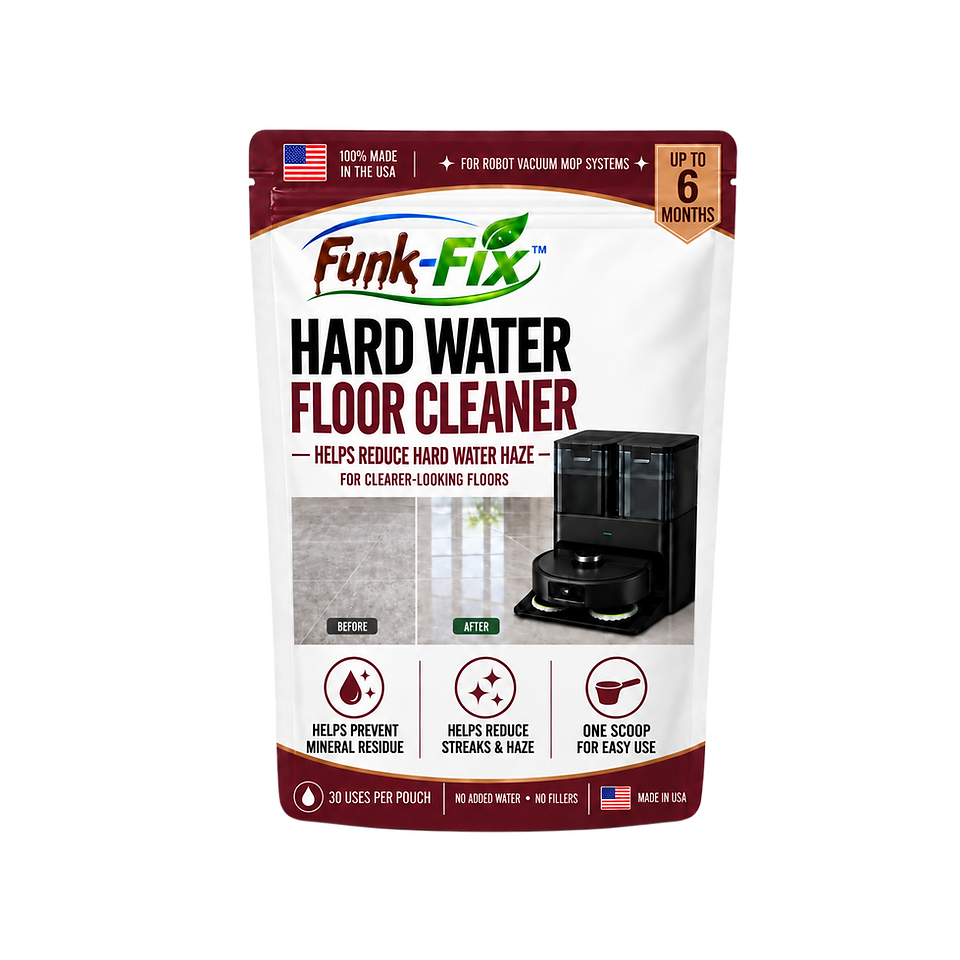
Buy it Now

Hard Water Is Often The Biggest Culprit
If you use tap water, especially in areas with hard water, minerals such as calcium and magnesium can remain behind after the water evaporates.
The result is often:
White haze
Dull appearance
Streaking
Reduced shine
This is one reason many robot mop manufacturers recommend distilled water or regular descaling maintenance.

Too Much Cleaner Can Leave Residue
Many owners assume that more cleaner equals cleaner floors.
In reality, excess cleaning solution often creates:
Sticky residue
Cloudy film
Streaks
Faster dirt buildup
Robot mops use very small amounts of water, so concentrated cleaners can accumulate quickly if not properly formulated.
Low-foam, residue-free solutions are generally the safest choice.
Dirty Mop Pads Spread Residue
A mop pad can only absorb so much dirt before it begins spreading contaminants around the floor.
Signs your mop pad needs cleaning include:
Increased streaking
Cloudy appearance
Visible dirt on the pad
Musty odors
Washing or replacing pads regularly helps maintain cleaning performance.

Don't Forget The Robot Mop System
Many people focus on the floor while overlooking the machine itself.
Inside the robot mop system you may find:
Mineral buildup
Biofilm
Dirty water residue
Partially clogged water lines
When these deposits accumulate, cleaning performance suffers and floors may appear cloudy even after mopping.
Regular maintenance helps keep water flowing properly and reduces residue transfer to floors.
How To Restore Clear Floors
If your floors already look cloudy:
Wash or replace mop pads.
Empty and clean both water tanks.
Flush the system if recommended by the manufacturer.
Use distilled water if practical.
Avoid overusing cleaning solution.
Remove mineral buildup through routine maintenance.
Most floors regain their shine after the source of the residue is eliminated.

Final Thoughts
Cloudy floors are usually a sign of residue buildup rather than a problem with the floor itself. Hard water minerals, excess cleaner, dirty mop pads, and neglected maintenance are the most common causes.
By keeping your robot mop system clean and using the right cleaning products, you can restore a clear, streak-free shine and improve overall cleaning performance.
Recommended Products


Related
"robot mop leaving streaks" → Why Is My Robot Mop Leaving Streaks?
"tap water in my robot mop" → Can I Use Tap Water In My Robot Mop?
"robot mop maintenance" → The Complete Robot Mop Maintenance Guide
"descale a robot mop" → How Often Should You Descale A Robot Mop?
"manufacturers recommend distilled water" → Why Do Robot Mop Manufacturers Recommend Distilled Water?
Frequently Ased Questions
Why do my floors look cloudy after mopping? Cloudy floors are usually caused by residue left behind from hard water minerals, excess cleaning solution, dirty mop pads, or buildup inside the robot mop system.
Can hard water cause cloudy floors? Yes. Hard water contains minerals such as calcium and magnesium that can leave a visible film after the water evaporates.
Why does my robot mop leave a haze on tile floors? A haze is often caused by mineral deposits, soap residue, dirty mop pads, or buildup inside the water delivery system.
How do I remove cloudy residue from floors? Clean mop pads, reduce cleaning solution usage, rinse tanks regularly, and remove mineral buildup from the robot mop system.
Will distilled water help prevent cloudy floors? In many cases, yes. Distilled water contains fewer minerals and may help reduce residue and scale buildup.


Comments