

Why Is My Robot Mop Not Spraying Water?
Updated: Sep 30

WHY IS MY ROBOT MOP NOT SPRAYING WATER?
Common Causes And How To Fix Them
If your robot mop suddenly stops spraying water, you're not alone. One of the most common complaints among robot mop owners is that the vacuum continues cleaning, but little or no water reaches the floor.
Reduced water flow can be caused by mineral deposits inside the tank or water system. Scale Funk Fix is a concentrated robot-mop descaling treatment designed to help dissolve hard-water buildup.

Buy it Now 
Buy it Now 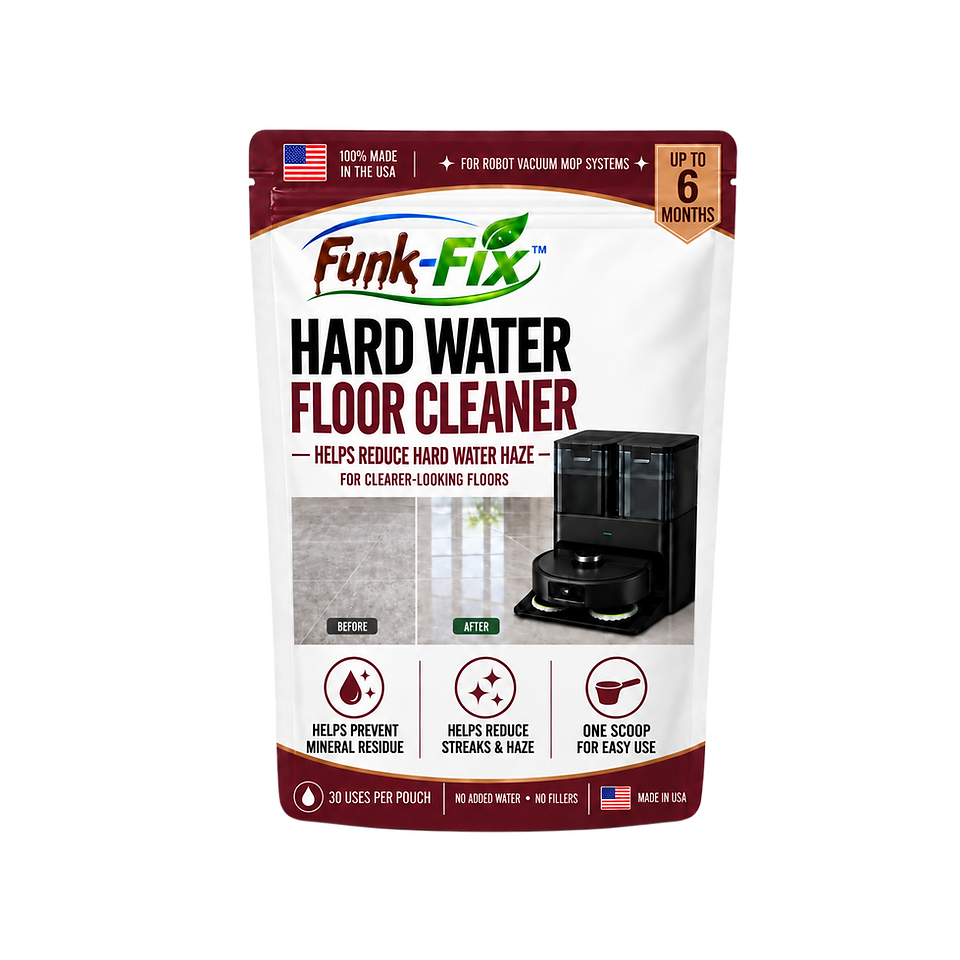
Buy it Now
Let's look at the most common reasons your robot mop may not be spraying water and what you can do about it.
1. The Clean Water Tank Is Empty
It sounds obvious, but it happens more often than you might think.
Many robot mop systems will continue vacuuming even when the clean water tank is empty. If the tank runs dry, the mop pads may drag across the floor without adding any moisture.
Check:
Clean water tank level
Tank properly seated in the dock
Tank cap securely installed
If the tank is empty, refill it and run a test cleaning cycle.
2. The Spray Nozzle Is Clogged
Small spray nozzles can become blocked by debris, mineral deposits, or dried residue.
When this happens, water cannot reach the mop pads even though the pump is operating normally.

Title: MINERAL BUILDUP CAN BLOCK WATER FLOW
Look closely at the spray nozzles and water outlets. If you notice white deposits or crusty buildup, mineral scale may be restricting water flow.
A soft brush and warm water can often remove minor blockages.
3. Hard Water Has Created Scale Buildup
Hard water contains dissolved minerals such as calcium and magnesium.
Over time these minerals can accumulate inside:
Water lines
Pumps
Nozzles
Water tanks
Dock systems
Even a small amount of buildup can reduce water flow and cleaning performance.
Many robot mop owners first notice scale problems when the machine begins leaving dry areas or stops dispensing water consistently.

4. The Filter Needs Cleaning
Some robot mop systems use small screens or filters to prevent debris from entering the water system.
If these filters become dirty, water flow may be restricted.
Check your manufacturer's maintenance guide and clean any water filters according to their recommendations.

Title: CHECK THESE FIRST
Before assuming there is a major problem, verify:
✅ Water tank is full
✅ Filter is clean
✅ Nozzles are clear
✅ Dock is connected properly
✅ Correct mop mode is selected
Many water flow issues can be solved with these simple checks.
5. Air Is Trapped In The Water System
After cleaning or refilling the tank, small air bubbles can occasionally become trapped in the water system.
This can temporarily interrupt water delivery.
Running an additional cleaning cycle or removing and reinstalling the tank often resolves the issue.
6. Dock Water Supply Problems
If you own a self-emptying or self-refilling robot mop system, the dock may be responsible for supplying water.
Problems can occur when:
The dock reservoir is empty
Water lines become blocked
Mineral buildup develops inside the dock
Checking the dock is just as important as checking the robot itself.

Title: HARD WATER CAUSES HIDDEN PROBLEMS
Mineral deposits are often invisible until performance starts to suffer.
Scale can accumulate inside hoses and internal water channels long before you see any visible signs on the outside of the machine.
Regular maintenance helps keep water flowing properly and reduces the risk of clogs.
7. Pump Failure
If you've checked everything else and water still isn't reaching the floor, the pump may have failed.
Signs of a pump issue include:
No water output at all
No pump sound during operation
Repeated water delivery errors
At this point, consult your manufacturer's support documentation for troubleshooting and repair options.
How To Prevent Water Flow Problems
A few simple maintenance habits can help keep your robot mop operating properly:
Empty and refill water tanks regularly
Clean filters and screens
Inspect spray nozzles
Follow manufacturer maintenance schedules
Address mineral buildup before it becomes severe
Routine maintenance often prevents the majority of water delivery problems.

Title: KEEP WATER FLOWING
Scale buildup is one of the most common causes of reduced water flow in robot mop systems.
Regular maintenance can help reduce mineral accumulation inside water tanks, lines, pumps, and nozzles, helping your robot mop perform at its best.
Final Thoughts
If your robot mop is not spraying water, don't panic. Most problems are caused by clogged nozzles, dirty filters, empty tanks, or mineral buildup rather than major component failures.
By inspecting the water system and performing regular maintenance, you can often restore normal water flow and keep your floors cleaning properly.
Related Articles
Recommended Products

Scale Funk Fix™

Floor Funk Fix™ PET

Floor Funk Fix™


Comments