

Can You Add a Floor Cleaner solution to a Roborock and Eufy Robot Vacuum Mop?
Updated: Sep 30
Can you put cleaning solution in a robot vacuum mop?
Yes - Water wets the floor and carries away loose dirt, but it does not contain the cleaning agents needed to lift oily residue, tracked-in grime or pet messes. The important distinction is using a concentrated, low-foam formula made for robot mop systems—not ordinary household floor cleaner or dish soap.
Floor Funk Fix is a concentrated, low-foam robot mop cleaner designed to provide the cleaning power that plain water lacks while helping avoid heavy foam and unnecessary residue.

Buy it Now 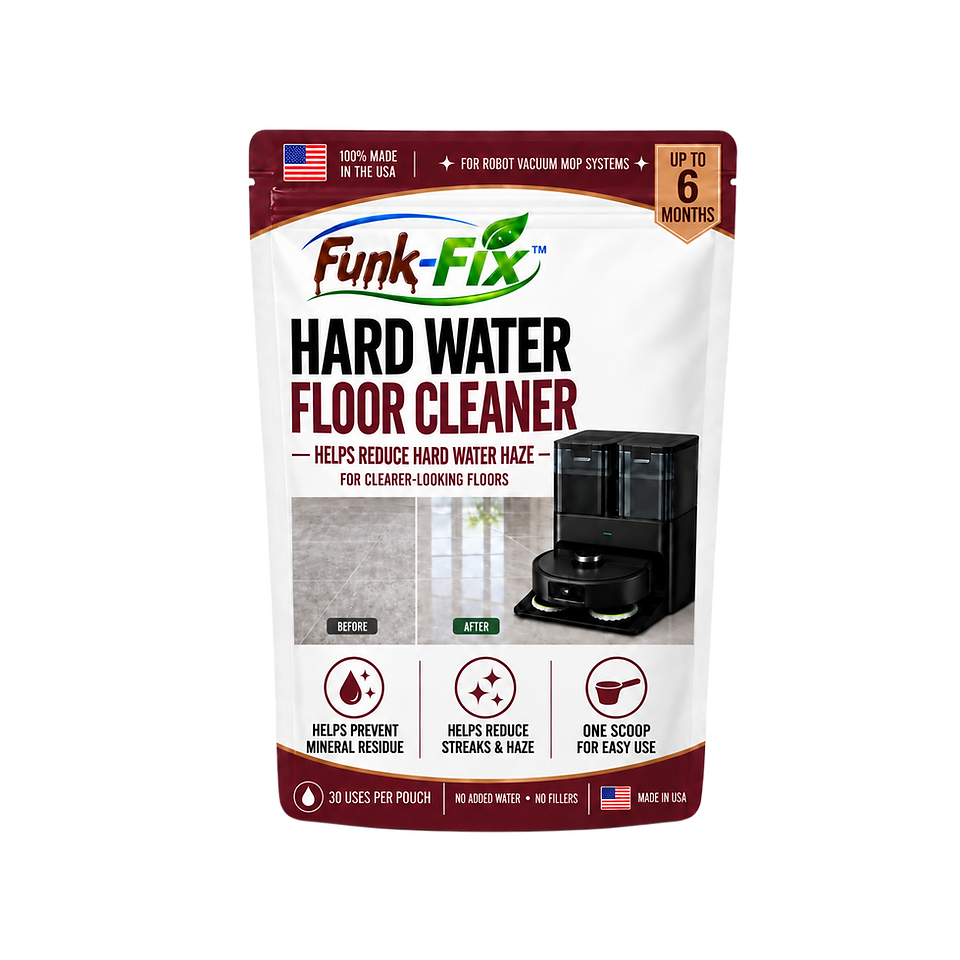
Buy it Now 
Buy it Now 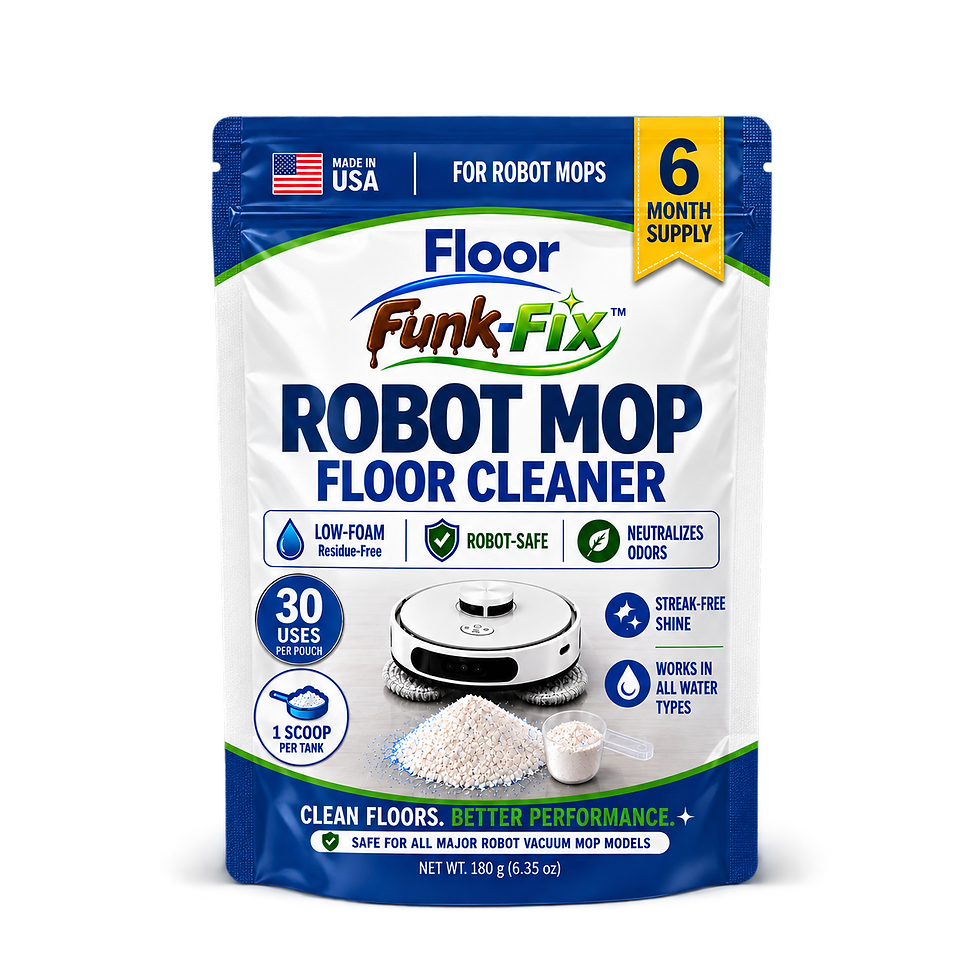
Buy it Now

What Do Robot Mop Manufacturers Recommend?
Most robot vacuum mop manufacturers recommend using clean water and following their specific guidelines regarding cleaning solutions.
Many brands caution against using household floor cleaners because they may:
Produce excessive foam
Leave residue inside water tanks and lines
Clog pumps and spray nozzles
Cause streaking on floors
Void warranty coverage
Always check your owner's manual before adding any cleaning product to the clean water tank.

Why Some Cleaning Solutions Cause Problems
Robot vacuum mop systems are very different from traditional mop buckets.
The water travels through small pumps, valves, tubing, and dispensing systems designed for low-viscosity liquids. Products containing soaps, waxes, oils, fragrances, or heavy detergents can leave deposits behind over time.
These deposits may lead to:
Reduced water flow
Uneven wetting of mop pads
Increased streaking
Internal buildup
Additional maintenance requirements

What About Hard Water?
Even if you use only water, mineral buildup can still become a problem.
In areas with hard water, minerals such as calcium and magnesium can accumulate inside tanks, valves, pumps, and water lines. Over time this buildup may affect water flow and cleaning performance.
This is one reason many robot mop manufacturers recommend distilled water.

Why Do Manufacturers Recommend Distilled Water?
Distilled water contains very few dissolved minerals compared to tap water.
Using distilled water can help:
Reduce mineral deposits
Minimize internal scale buildup
Improve long-term performance
Reduce maintenance requirements
However, many robot mop owners use tap water because distilled water may not always be convenient or practical.

How To Keep Your Robot Mop System Performing Its Best
A simple maintenance routine can help keep your robot mop operating efficiently:
After Each Cleaning Cycle
Empty the dirty water tank
Rinse tanks if recommended
Clean mop pads regularly
Monthly
Inspect water tanks and filters
Check for signs of mineral buildup
Perform routine maintenance on the water system
Regular maintenance can help reduce scale buildup, improve water flow, and minimize floor streaking.

Final Thoughts
Can you put cleaning solution in a robot vacuum mop?
The safest answer is to follow your manufacturer's recommendations and avoid products that can leave residue, create excess foam, or clog internal components.
Whether you use water alone or an approved cleaning solution, regular maintenance is important. Keeping tanks, lines, and internal components clean can help maintain water flow, reduce streaks, and keep your robot mop performing at its best.
Related Articles
Recommended Products


Comments